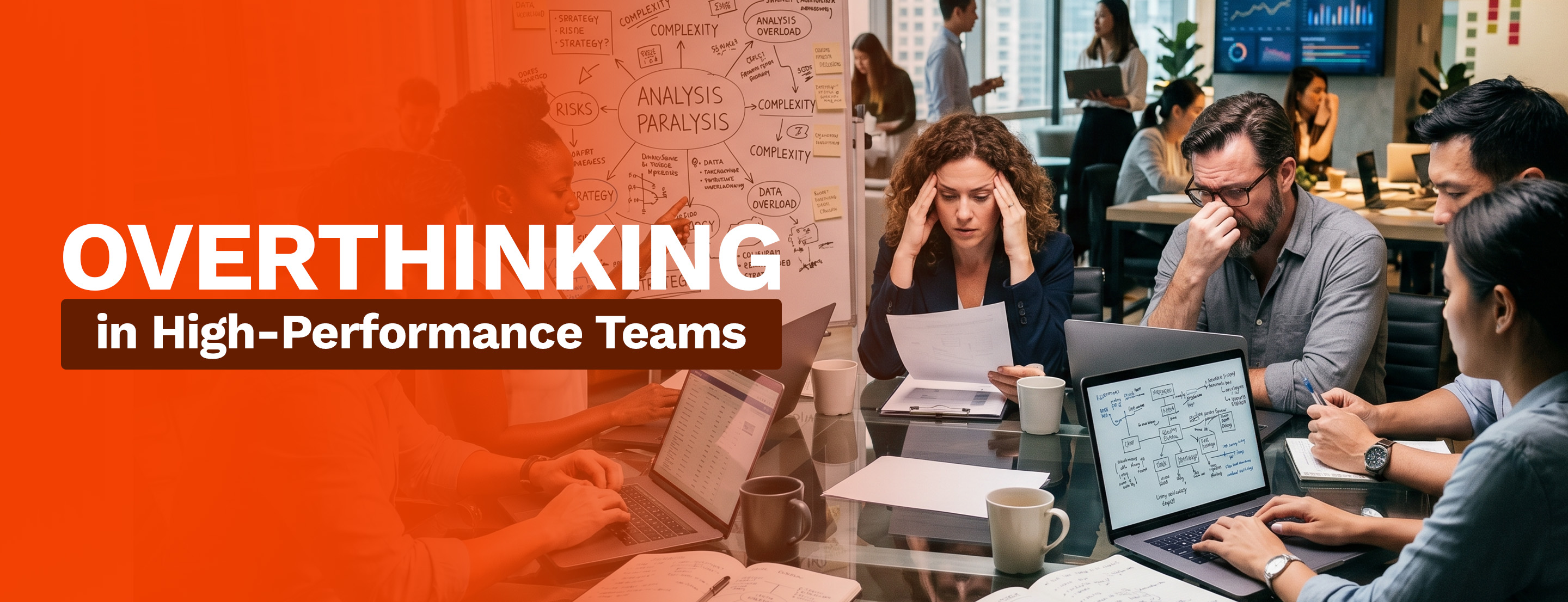


“One of the most exhausting things at work is not always the workload. Sometimes it is a constant battle inside your own mind.”
High-performance workplaces are often associated with growth, ambition, fast learning, and achievement.
These environments push people to think better, adapt faster, communicate smarter, and continuously improve themselves professionally. And honestly, many professionals genuinely enjoy working in ambitious teams because such workplaces challenge them to grow beyond their comfort zones.
But there is another side to these environments that rarely gets discussed openly. The emotional exhaustion caused by overthinking. Not the kind of overthinking that happens occasionally.
But the kind that slowly becomes part of everyday professional life: questioning yourself constantly, analyzing every interaction, fearing mistakes before even beginning, and carrying invisible self-doubt while trying to appear confident externally.
And over time, this silent mental pressure starts affecting not only performance, but also confidence, communication, relationships, and emotional well-being.
One of the biggest effects of overthinking in workplaces is hesitation. Many professionals do not struggle because they lack capability. They struggle because their mind convinces them they are not ready enough yet. So they delay speaking. Delay contributing. Delay asking questions. Delay taking initiative.
Not because they do not care.
But because fear and self-doubt create mental resistance before action even begins.
And while others may simply see silence externally, internally the person is fighting multiple mental battles at once. This is one of the most painful realities of workplace overthinking: people start doubting themselves before they even give themselves a chance.
Over time, this hesitation slowly affects confidence because the more a person avoids participation, the more disconnected they begin feeling from their own potential.
Confidence at work is not destroyed overnight. Sometimes it slowly weakens through repeated self-doubt. Overthinkers often analyze themselves more harshly than anyone else around them ever would.
A small mistake becomes a major mental event. One awkward interaction gets replayed repeatedly. One imperfect presentation feels like proof of incompetence.
And gradually, the person starts creating a negative professional image of themselves internally. Even if nobody else is judging them that harshly. This is what makes overthinking emotionally dangerous in professional environments. The workplace may not always be attacking the individual, but internally, the individual begins attacking themselves constantly.
They begin underestimating their own intelligence. Questioning their own value. Doubting their own communication skills. Minimizing their own achievements.
And eventually, their inner voice becomes far more critical than the external workplace itself.
One thing I have personally noticed is that overthinkers often develop the habit of mentally demeaning themselves at work as well as in personal lives. Even before receiving feedback from others, they assume they are underperforming. Even before someone questions their capability, they question themselves first. And this creates an exhausting mental cycle.
The person starts believing:
Meanwhile, they begin seeing themselves as “less than,” even when there may be absolutely no evidence supporting that belief. This silent self-dismissal affects professional behavior deeply.
People stop expressing ideas openly. They stop trusting their instincts. They hesitate before participating. They become overly careful about everything they say.
And eventually, overthinking turns capable professionals into emotionally exhausted observers of environments they were fully capable of contributing to.
Another difficult reality of workplace overthinking is that it slowly changes personality and social behavior too. People who overthink continuously often become quieter over time.Not because they dislike people. But because their mind becomes too occupied internally.
They start overanalyzing conversations after they happen. Thinking too much before responding. Worrying about how they sounded socially. Fearing judgment even in casual workplace interactions.
As a result, they slowly begin withdrawing emotionally.
They speak less in meetings. Interact less socially. Avoid unnecessary conversations. Keep thoughts to themselves. And over time, this silence creates emotional isolation inside workplaces.
Ironically, many overthinkers deeply want connection, collaboration, and belonging. But their own fear of judgment slowly pushes them toward emotional distance. And because they appear “quiet” externally, people around them may never realize the amount of internal noise they are carrying every day.
Overthinking does not only affect confidence and communication. It affects mental health too. A constantly anxious mind eventually becomes emotionally tired.
When professionals continuously: analyze themselves, fear mistakes, compare themselves with others, and carry internal pressure silently, their emotional energy slowly starts draining.
Even small workplace situations begin feeling mentally heavy.
A delayed message creates anxiety. A short reply feels personal. A meeting invitation creates stress. Feedback feels emotionally overwhelming. And slowly, the brain stops experiencing work as only work. It starts experiencing work emotionally.
This is why many professionals today feel mentally exhausted even when they are technically managing their responsibilities.
Because mentally, they are carrying far more pressure internally than they express externally.
One reason overthinking becomes worse in ambitious workplaces is because everyone around us appears composed.
People present confidently. Speak quickly. Handle pressure calmly. Express ideas fluently. And naturally, overthinkers begin assuming: “I am the only one struggling internally.”
But the truth is, many professionals experience self-doubt privately.
The difference is that not everyone expresses it openly. And perhaps that is why conversations like these matter. Because workplace growth is not only about productivity, performance, and achievement. It is also about learning how to manage fear, self-doubt, emotional pressure, and internal criticism while continuing to grow professionally.
Overthinking is often misunderstood as simply “thinking too much.” But in reality, workplace overthinking is much deeper than that.
It is the fear of not being good enough. The fear of being judged. The fear of failure. The fear of visibility. The fear of not belonging.
And when these fears remain unaddressed for too long, they slowly begin affecting confidence, communication, emotional health, and relationships at work.
Perhaps the solution is not becoming fearless overnight. Perhaps it is learning to stop fighting ourselves internally while trying to grow externally. Because many capable professionals are not failing due to lack of intelligence or potential. They are simply becoming mentally exhausted from carrying too much self-doubt silently. And maybe the first step toward healthier workplaces is recognizing that behind many quiet professionals is not laziness or disinterest.
It is often a mind that has been overthinking for far too long.
So, let’s check out a poem which I wrote for an overthinking mind.
In a world full of Chaos
I have my own bubble
Fixating and brooding
My worries are always double
O Brain! Please stop for once
Let me be subtle
Don’t let me go in labyrinth
Do not let me struggle!

Currently working as a QA Intern at MIDCAI, I’m learning the ropes of software testing, understanding project workflows, and growing through hands-on experience in a fast-paced environment. Beyond tech, I’m deeply interested in writing, workplace dynamics, and exploring the realities of office culture through observations and conversations.
Get in touch with us for any enquiries and questions
Define your goals and identify areas where technology can add value to your business
We are looking for passionate people to join us on our mission.
where your skills fuel innovation and your growth powers ours

.jpg)