

In today's digital landscape, marketing automation has transitioned from being a nice-to-have luxury to an essential business requirement. Despite its critical importance, numerous organizations struggle to unlock its complete potential, resulting in missed revenue opportunities and inadequate customer service.
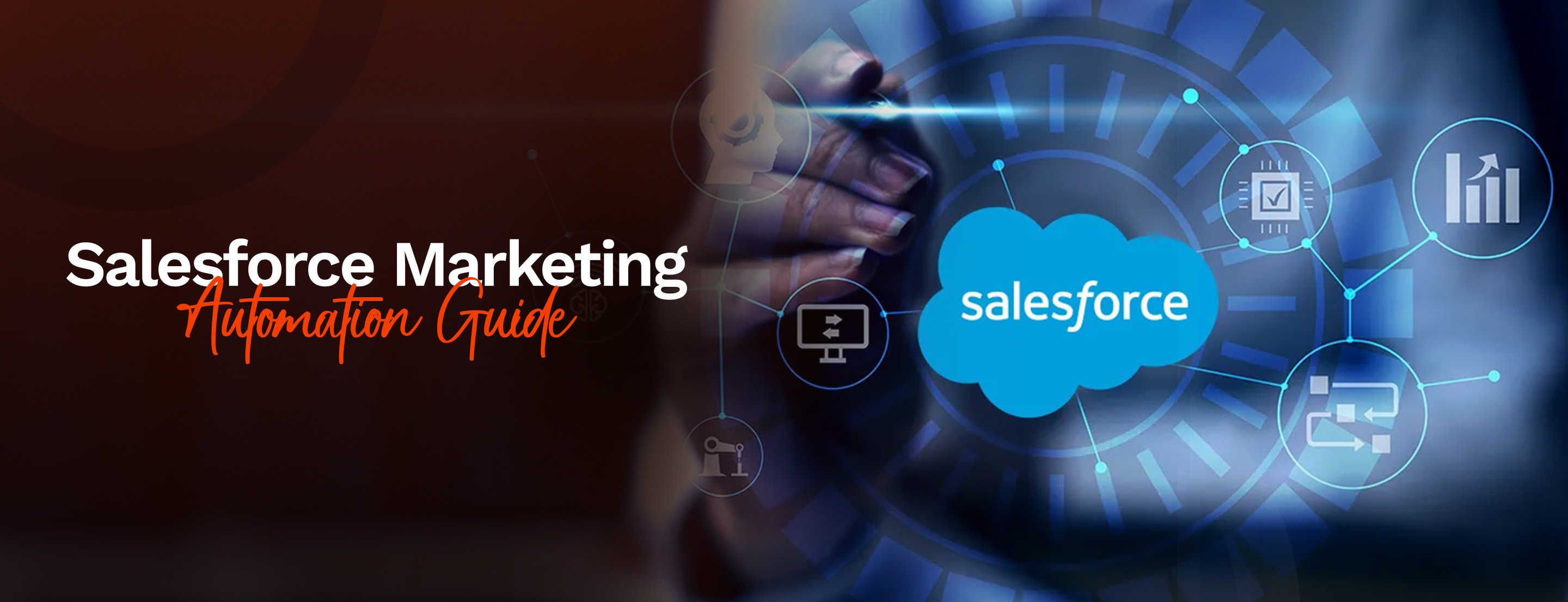
Salesforce Marketing Automation offers a comprehensive solution, an integrated ecosystem engineered to streamline operations, personalize interactions, and optimize every customer touchpoint. For marketing professionals aiming to enhance their skill set or business leaders pursuing competitive differentiation, mastering Salesforce's marketing automation capabilities can fundamentally transform customer engagement approaches.
This comprehensive guide covers everything from foundational principles to sophisticated implementation techniques. You'll explore leveraging Salesforce Marketing Cloud, Journey Builder, and integrated automation tools to develop high-converting campaigns, effectively nurture leads, and generate quantifiable ROI. Upon completion, you'll possess a practical roadmap for deploying marketing automation that produces tangible business outcomes.
Salesforce Marketing Automation encompasses the technologies and methodologies enabling organizations to automate repetitive marketing activities, deliver personalized customer experiences at scale, and track campaign effectiveness all within the unified Salesforce platform.
Fundamentally, marketing automation eliminates tedious manual work. Rather than crafting individual emails or manually categorizing audiences, you establish intelligent automated workflows that activate based on customer actions, demographic information, or position in the customer lifecycle.
Consider this analogy: picture an accomplished orchestra conductor who precisely knows when each musician should perform. Salesforce Marketing Automation functions as your conductor, synchronizing every marketing interaction to deliver a cohesive customer experience. When prospects download your content, the system automatically dispatches follow-up communications, notifies your sales personnel, and enrolls them in nurture sequences entirely without manual involvement.
The Salesforce marketing automation ecosystem comprises several interconnected platforms that work in harmony:
Salesforce Marketing Cloud serves as the flagship marketing solution, delivering email, mobile, social media, and advertising functionalities. Pardot (Marketing Cloud Account Engagement) provides B2B-oriented automation with robust CRM connectivity.
Journey Builder offers visual workflow design for constructing multi-channel customer experiences.
Email Studio enables sophisticated email marketing and automation capabilities.
Automation Studio functions as the backend automation engine managing scheduled and behavior triggered activities.
Each platform addresses specific requirements while integrating seamlessly to create comprehensive automation solutions.
Customer expectations have evolved dramatically. Modern consumers demand personalized experiences across all touch points, relevant content delivered at precisely the right moment through their preferred communication channels.
Manual marketing approaches simply cannot scale to satisfy these expectations. While a small operation might handle personalized outreach for 100 customers manually, this becomes impossible at 1,000 or 10,000 customers.
Increased Efficiency: Marketing teams implementing automation report saving over six hours weekly on routine activities. These reclaimed hours redirect toward strategic priorities like campaign optimization and creative development.
Higher Conversion Rates: Automated nurture sequences typically achieve 50% superior click-through rates compared to one time email blasts. This success stems from delivering relevant content based on actual behavior rather than arbitrary scheduling.
Improved Lead Quality: Automatic lead scoring and nurturing ensures sales teams receive better-qualified prospects, translating to shorter sales cycles and improved close rates.
Enhanced Customer Experience: Automation enables timely, contextually relevant communications. When customers abandon shopping carts, automated reminders arrive within hours not days later when they've already purchased from competitors.
Measurable ROI: Every interaction traces back to specific campaigns and channels, providing clear visibility into which efforts drive revenue and which require refinement.
Today's market winners aren't necessarily the largest companies they're organizations using automation to work smarter and more efficiently.
Salesforce Marketing Cloud represents the enterprise-level solution for advanced marketing automation. It transcends basic email functionality it's a complete platform for managing customer relationships across every digital channel.
Marketing Cloud Studios
Marketing Cloud organizes capabilities into specialized "Studios," each concentrating on specific marketing channels:
Email Studio delivers enterprise email marketing with advanced personalization, split testing, and dynamic content capabilities. You can segment audiences using virtually any data attribute and automate sophisticated email workflows.
Mobile Studio facilitates SMS, MMS, and push notification campaigns. Given that mobile engagement frequently surpasses email, this capability proves essential for connecting with customers where they actively spend time.
Social Studio handles social media marketing, monitoring, and engagement across platforms. You can schedule content, track brand mentions, and route customer service inquiries all from one centralized interface.
Advertising Studio bridges your CRM data with advertising platforms including Google, Facebook, and LinkedIn. This enables custom audience creation, suppression of existing customers from acquisition campaigns, and measurement of advertising impact on actual revenue.
Journey Builder unifies everything by orchestrating multi-channel experiences. Individual journeys might incorporate emails, text messages, push notifications, and even physical direct mail all triggered by customer behavior and preferences.
Marketing Cloud vs. Pardot
This question surfaces frequently, with the answer depending on your business model:
Choose Marketing Cloud for B2C or high volume B2B operations, when multi channel marketing proves essential, when sophisticated personalization at massive scale is required, or when campaigns involve millions of contacts.
Choose Pardot for B2B marketing with extended sales cycles, when deep Salesforce CRM integration is critical, when lead scoring and grading drive sales processes, or when focusing primarily on email and landing page campaigns.
Many enterprises leverage both platforms—Pardot for B2B lead generation and Marketing Cloud for customer retention and engagement.
Successful implementation requires more than purchasing licenses. You need comprehensive strategy, careful planning, and proper execution.
Define Clear Objectives
Before configuring any tools, clarify desired outcomes. Vague aspirations like "improve marketing" undermine projects from the start.
Establish SMART objectives: Increase qualified leads by 25% in Q2. Reduce customer churn by 15% through automated retention campaigns. Achieve 40% email open rates across nurture programs.
Specific, measurable goals guide configuration decisions and provide benchmarks for tracking success.
Audit Current State
Document existing marketing processes comprehensively. Identify current campaigns, lead entry methods, customer journey touch points, time-consuming manual tasks, and points where leads are lost.
This audit reveals automation opportunities and identifies quick wins that build implementation momentum.
Map Customer Journey
This step determines automation success. Map every touchpoint from initial awareness through purchase and beyond. For each stage, identify triggering actions, appropriate content and messaging, optimal channels, and typical duration.
A B2B software company might map: Anonymous visitor → Content download → MQL → Sales engagement → Opportunity → Customer → Advocate. Each transition triggers different automated workflows.
Clean and Organize Data
Marketing automation amplifies data quality issues. Deduplicate records ruthlessly. Standardize data fields. Establish data governance processes maintaining ongoing quality.
Create logical segmentation strategies based on industry, company size, engagement level, purchase history, or lifecycle stage but plan these segments before importing data.
Start Small, Then Scale
Avoid attempting to build entire automation infrastructure immediately. Start with one high-impact use case: welcome series for new subscribers, abandoned cart recovery, re-engagement campaigns for inactive contacts, or event registration workflows.
Perfect this single workflow, measure results, and apply learnings to subsequent automation projects.
Journey Builder represents Salesforce's most powerful automation tool, visualizing and automating multi-channel customer experiences from a single canvas.
Journey Builder Fundamentals
Journey Builder functions like a sophisticated roadmap that adapts based on traveler behavior. Entries define how contacts enter journeys. Activities represent actions like sending emails, waiting specified periods, updating CRM records, or splitting paths based on criteria. Decisions create branching logic based on actions like opening emails or making purchases. Goals define success metrics.
Practical Journey Example
Consider a post-webinar nurture journey: Contacts enter after webinar attendance. Immediately, they receive thank-you emails with recordings. Two days later, engaged viewers receive relevant case studies while non-viewers get reminder emails. Five days later, engaged contacts trigger sales alerts and demo invitations, while others continue educational nurture. Ten days later, demo bookers enter separate journeys while others receive industry reports and monthly newsletters.
This journey personalizes experiences based on engagement while keeping sales informed of high-intent prospects.
Advanced Techniques
Einstein Split Activities use artificial intelligence determining optimal send times for each individual. API Events trigger journeys from external systems. Engagement Splits create A/B tests within journeys, automatically directing more traffic toward winning variants. Multi-Contact Journeys coordinate experiences across multiple contacts for account-based marketing campaigns.
Email remains the highest ROI marketing channel, returning $36 for every dollar spent. Success requires sophisticated automation beyond basic newsletters.
Automated Campaign Types
Welcome Series: Well-crafted welcome series increase engagement by 33% and generate 320% more revenue than single welcome emails. Structure strategically with immediate welcome messages, promised content delivery on day three, storytelling on day seven, product introductions on day fourteen, and social proof on day twenty-one.
Behavior-Triggered Campaigns: Respond to specific actions like browse abandonment, cart abandonment, post-purchase cross-sell opportunities, and content engagement.
Lifecycle Campaigns: Deliver different messages for different customer stages lead nurture with educational content, sales enablement with case studies, customer onboarding with training, retention with renewal reminders, and win-back campaigns for inactive customers.
Personalization Strategies
Generic emails fail. Personalized emails achieve 26% higher open rates and 41% higher click rates.
Progress through personalization levels: use names and company names, reference specific behaviors, employ dynamic content blocks showing different images and offers based on segments, and leverage predictive content using Einstein AI automatically selecting the most relevant content for each individual.
Best Practices
Maintain proper sending frequency typically 1-2 emails weekly for engaged B2B subscribers. Implement send-time optimization identifying optimal send times for each recipient. Test relentlessly including subject lines, sender names, content, calls-to-action, and timing. Monitor deliverability metrics signaling authentication issues, list quality problems, or content concerns.
Lead nurturing addresses a fundamental reality: most prospects aren't ready to buy upon first engagement. The average B2B sale requires seven or more touches before conversion.
Designing Effective Programs
Segment by persona and industry, tailoring content accordingly. Map content to buying stages: awareness stage with educational content, consideration stage with comparison guides and ROI calculators, and decision stage with trials, pricing information, and testimonials.
Lead Scoring and Grading
Lead Scoring accumulates points based on engagement: email opens, clicks, website visits, pricing page views, form submissions, and demo requests each earn points.
Lead Grading assigns letter grades reflecting demographic fit: enterprise companies in target industries earn A grades, mid-market companies earn B grades, and small businesses or non-target industries receive C or D grades.
An A-rated lead with 100+ points becomes a hot prospect requiring immediate sales follow-up, while C-rated leads with low scores remain in automated nurture.
Automated Lead Assignment
When leads reach qualification thresholds, automation routes them appropriately through geographic routing, round-robin assignment, account-based routing, or skills-based routing. Immediate assignment prevents leads from cooling during manual distribution delays.
Automation without measurement wastes investment. Salesforce provides robust analytics proving marketing's business impact.
Key Performance Indicators
Track email metrics including open rates, click-through rates, click-to-open rates, conversion rates, and revenue per email. Monitor journey metrics like entry rates, goal achievement rates, completion times, and drop-off points. Measure lead management metrics including MQL generation rates, MQL-to-SQL conversion rates, lead velocity, cost per lead, and marketing-sourced revenue percentages. Calculate campaign ROI considering total costs and revenue generated.
Attribution Modeling
Multi-touch attribution determines which marketing activities actually drive revenue. First-touch attribution credits initial touch points, last-touch attribution credits final touch points, and multi-touch attribution distributes credit proportionally across all touch points. Custom attribution models weight certain touch points more heavily based on specific sales processes.
Implementation challenges are inevitable. Address them proactively: implement data governance policies addressing poor data quality, start simple avoiding overcomplicated journeys, involve sales from the beginning ensuring adoption, use test contacts verifying everything before launch, and use responsive templates ensuring excellent mobile experiences.
Salesforce Marketing Automation represents more than technology it's a strategic approach to building customer relationships at scale. Success comes when strategy precedes technology implementation. Start small and scale gradually, with one well-executed welcome series delivering more value than ten incomplete projects. Measure relentlessly and optimize continuously, treating every campaign as an experiment. Sales and marketing alignment multiplies automation effectiveness dramatically.
Your next steps depend on your current position. Beginners should start with one high-impact use case. Established programs should audit existing automation identifying opportunities for AI-powered features. Invest in ongoing education as Salesforce releases three major updates annually.
The tools exist. The strategies work. The only question is whether you'll take action or let competitors gain the automation advantage. The future of marketing belongs to those embracing automation intelligently. With Salesforce Marketing Automation, that future is already within reach.

Working as Manager – People and Admin in a dynamic environment at MIDCAI, I’m passionate about creating people-first processes, building purposeful teams, and driving operational efficiency. I thrive on meaningful collaboration and continuous learning. Whether it’s supporting team growth, creating systems that empower people, or adapting to a rapidly evolving tech landscape, I bring heart and hustle to every challenge.
Get in touch with us for any enquiries and questions
Define your goals and identify areas where technology can add value to your business
We are looking for passionate people to join us on our mission.
where your skills fuel innovation and your growth powers ours