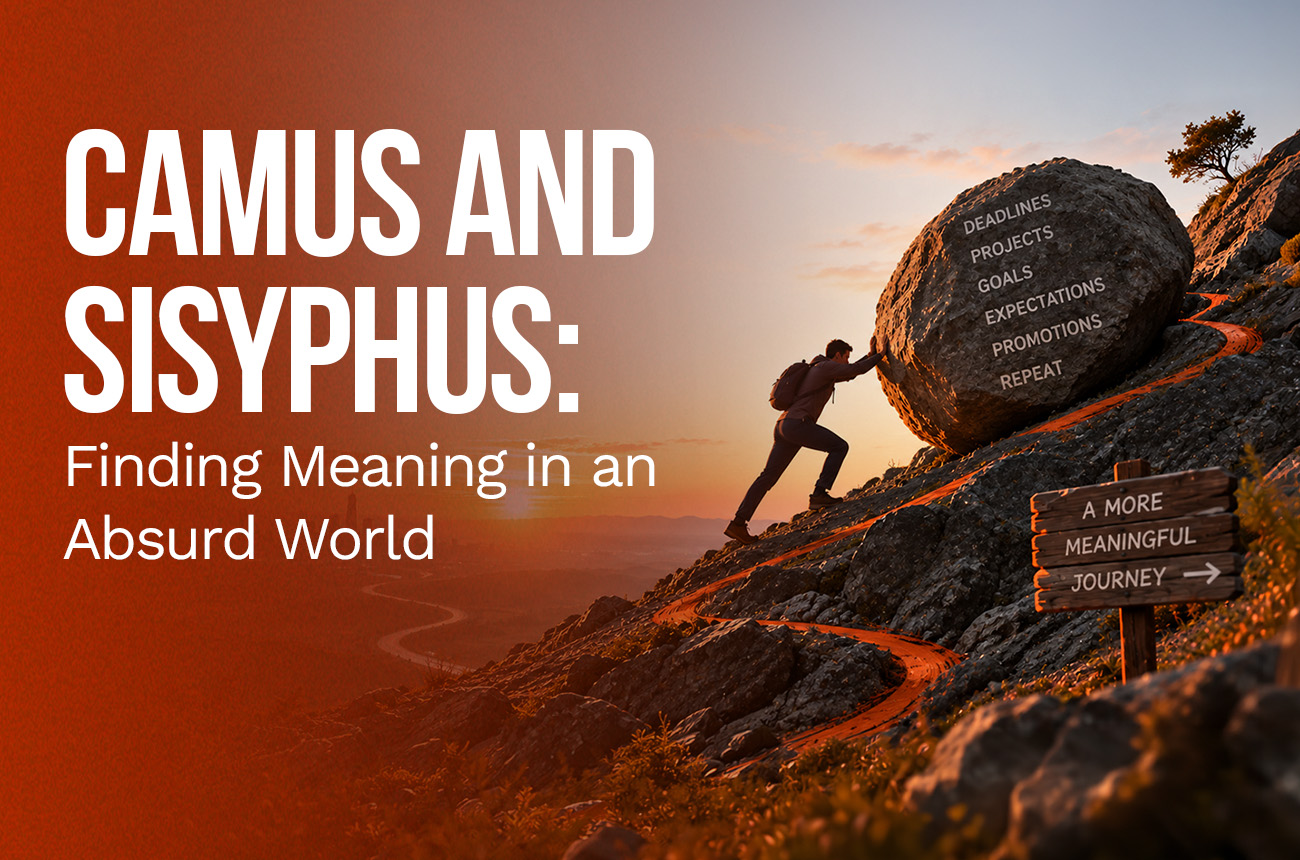



“Not every pause is a setback. Some are the quiet spaces where clarity, strength, and direction are rebuilt.”
For decades, the professional world rewarded only one kind of story: uninterrupted progress.
A continuous resume was seen as proof of discipline, ambition, and reliability. Any pause, no matter the reason, was quietly treated as a red flag. Career breaks were framed as deviations from seriousness, often forcing professionals to justify time spent away from formal employment rather than evaluate what they gained from it.
But the modern workforce is changing faster than these assumptions.
And the data is clear: career breaks are not the threat. The inability to contextualize them is.
Career breaks are no longer rare or niche. According to LinkedIn’s Global Talent Trends, nearly 62% of professionals have taken or plan to take a career break at some point in their working life. The reasons vary like caregiving, health, education, entrepreneurship, burnout recovery etc but the pattern is consistent. Careers are becoming non-linear by design.
In parallel, average job tenure has decreased, skill half-life has shortened, and entire roles are being redefined every few years. In such an environment, continuous employment does not automatically translate to continuous relevance.
Yet hiring frameworks, resume screening systems, and even professional self-perception still lag behind this reality. I definitely can say this because I was afraid of going out to work again due to my career gap of 6 years approx. Taking care of my son was more important at that time and later after this much gap I automatically thought now who is going to invest in me after such a long gap.
One of the most deeply ingrained assumptions in professional evaluation is that an uninterrupted career signals superior competence. Longevity, consistency, and constant visibility are often mistaken for mastery. In reality, continuous employment frequently reflects conditions rather than capability.
It may indicate economic necessity, not sustained engagement. It may reveal a lack of space to pause, not a lack of self-awareness. It may signal organizational inertia, not ongoing growth or relevance.
According to the World Economic Forum, nearly 40% of core skills are expected to change within a five-year horizon. In such an environment, continuity without recalibration can quietly become stagnant. Professionals who move relentlessly from role to role, without time to reassess or re-skill, often accumulate experience without evolution.
Competence today is not defined by how long someone has stayed in motion, but by how deliberately they have adapted. Like Agent force, the term has now taken over in a lot of discussions that happen around Salesforce. Everyone talks about how AI will take over every job eventually. But in my humble opinion, that is not completely true. Yes it might reduce jobs but it definitely cannot replace humans. Yes, but how one will adapt to this new technology is going to be the one who stays. Like what Darwin says, it is all about the survival of the fittest.
So, a well-timed career pause used for learning, reflection, or realignment can interrupt autopilot thinking. It creates space to absorb new perspectives, rebuild cognitive flexibility, and re-enter the workforce with sharper relevance. In a world where skills expire faster than titles, intentional pauses are not professional risks. They are strategic resets.
Contrary to popular belief, career breaks are rarely periods of professional stagnation. Multiple studies in organisational psychology show that individuals who step away from high-pressure environments often return with:
These outcomes directly correlate with leadership effectiveness and long-term performance.
However, because these competencies are developed outside traditional job titles, they often remain uncodified and therefore invisible unless articulated deliberately.
Career breaks do not become liabilities because of what occurs during them. They become liabilities because of what remains unarticulated afterward. Silence does not communicate neutrality. It creates ambiguity. Ambiguity triggers assumption. And assumption quietly corrodes perceived credibility.
In hiring psychology, uncertainty is rarely interpreted generously. When evaluators lack context, they rely on heuristics designed to minimize risk. Faced with incomplete information, decision-makers default to conservative judgment not out of personal bias, but because modern hiring operates within compressed timelines, high stakes, and cognitive overload. This is structural behavior, not moral failure.
A resume gap without narrative framing is therefore not an empty space. It means vacuum and vacuums are always filled, often inaccurately.
When candidates do not define the story of their pause, the system does it for them. And systems prioritize predictability over potential. Clarity changes that equation. Context transforms absence into intention. Narrative converts uncertainty into signal. Ownership restores professional agency.
Because in the modern labor market, credibility is not diminished by a career break. It is diminished by the absence of explanation.
And silence, however dignified, it may feel is far riskier than a well-claimed truth.
The hesitation to address career breaks openly is deeply cultural. Many professionals internalize the belief that:
But silence does not remove scrutiny, it simply removes agency. When professionals do not define their own narrative, it is defined for them.
Talking about a career break does not require emotional disclosure or lengthy justification. What it requires is strategic clarity. The goal is not to explain why the break happened, but to clearly communicate what it meant and how it adds value today.
High-impact framing rests on three elements:
1. Intentionality: Position the break as a conscious decision, not an accident. “I chose to step back to focus on…”
2. Outcomes: Highlight what the time away developed skills, perspective, or capabilities. “This period strengthened my ability to…”
3. Relevance: Connect the experience directly to your current role or goals. “These insights now help me contribute more effectively…”
When these elements are present, the conversation shifts naturally from a gap that needs defending to an experience that demonstrates growth. A career break, when framed with intention and relevance, is no longer a missing chapter. It becomes context. And context turns time away from a perceived risk into a source of professional credibility.
As businesses prioritize resilience, adaptability, and sustainable performance, they must re-evaluate how they interpret professional continuity. Organizations that penalize career breaks often overlook:
Forward-thinking companies are already adapting, introducing returnship programs, skills-based hiring models, and experience-weighted evaluations. Not as acts of empathy, but as a competitive strategy.
Professional value is not measured by uninterrupted presence. It is measured by accumulated insight, applied skill, and contextual growth over time. Careers are not timelines to be defended. They are bodies of work to be understood.
Every role, pause, transition, and reset contributes to that body of work. Some chapters are loud and visible. Others are quiet, internal, and deeply formative. Pauses are not interruptions to growth, they are often where growth becomes possible.
But this value only emerges when professionals are willing to claim those chapters, not conceal them.
A career break that is acknowledged, articulated, and positioned with clarity becomes part of a larger professional narrative: one that reflects self-awareness, resilience, and adaptability. When ignored or hidden, that same break becomes misunderstood, not because it lacks worth, but because it lacks voice.
And that distinction matters.
Conclusion, For decades, success was defined by continuity alone. But the modern workforce demands something more honest, and far more human.
In a world where skills evolve rapidly, roles transform constantly, and personal realities cannot be separated from professional lives, the expectation of uninterrupted careers is no longer realistic. Nor is it useful. What determines career strength today is not the absence of pauses, but the presence of clarity. Careers are not broken by stopping. They are broken when people feel compelled to erase their pauses, diminish their experiences, or pretend parts of their journey never happened.
Silence creates gaps where meaning should exist. Ownership restores that meaning.
When professionals speak clearly about where they paused, what they learned, and how they returned stronger, they reclaim agency over their narrative. And when organizations learn to listen beyond timelines, they gain access to talent shaped not just by work but by life. Because a career is not a straight line to be maintained. It is a story to be told honestly.
And the most powerful careers are not the ones without breaks but the ones where every chapter, including the pauses, is allowed to count.
“A career is not a straight line, it is a story. And every honest story includes pauses worth claiming.”

Working as Manager – People and Admin in a dynamic environment at MIDCAI, I’m passionate about creating people-first processes, building purposeful teams, and driving operational efficiency. I thrive on meaningful collaboration and continuous learning. Whether it’s supporting team growth, creating systems that empower people, or adapting to a rapidly evolving tech landscape, I bring heart and hustle to every challenge.
Get in touch with us for any enquiries and questions
Define your goals and identify areas where technology can add value to your business
We are looking for passionate people to join us on our mission.
where your skills fuel innovation and your growth powers ours