


Agentforce 360 represents a new kind of intelligence inside Salesforce. It goes beyond answering questions or following predefined flows. Instead, it enables intelligent agents that can reason, act, and collaborate across business workflows.
Today, more than 12,500 companies across 39 countries are using Agentforce to build intelligent agents and rethink what work automation looks like inside CRM systems and beyond.
Customers using Agentforce have already reported:
This blog brings together 15 real-world Agentforce 360 use cases, inspired by how organisations are applying agentic workflows today.
Across industries, companies are facing the same reality. Teams are overloaded. Data is spread across systems. And customer expectations keep rising.
Agentforce 360 addresses this by embedding autonomous agents directly into Salesforce workflows, right where work already happens.
Instead of introducing another standalone tool, organisations deploy agents that:
This approach makes Agentforce 360 suitable not only for innovation teams, but also for regulated, revenue-critical, and customer-facing functions.
The following use cases show how Agentforce 360 plays out in real environments.
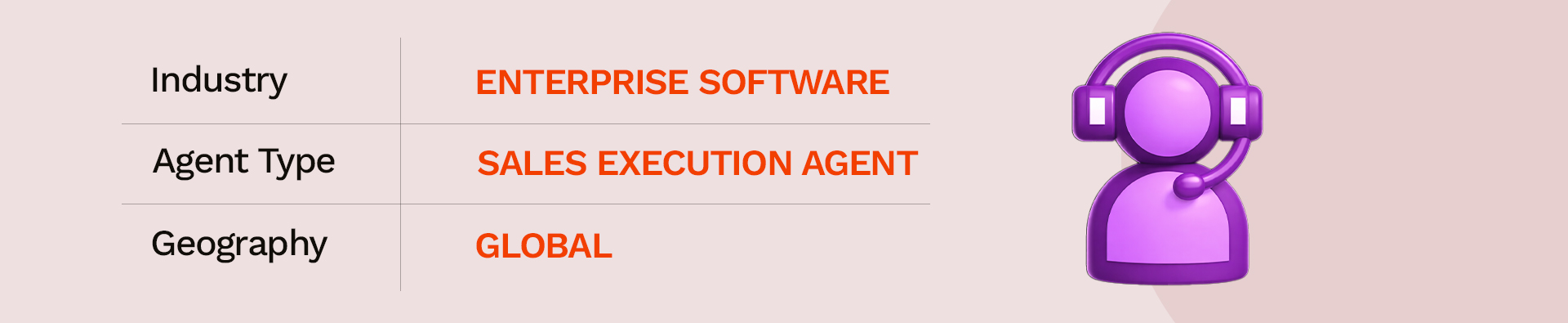
Sales teams don’t lose time because they lack skill. They lose time because execution work pulls focus away from selling. In this deployment, Agentforce 360 was embedded directly into the sales lifecycle to automate opportunity discovery, qualification, and progression, without removing human judgment.
The agent continuously scanned CRM signals, historical deal patterns, and buyer activity to identify accounts showing strong purchase intent. When confidence thresholds were met, opportunities were automatically created, enriched, and routed to the right sellers with contextual recommendations. This removed the need for manual opportunity creation and reduced early-stage leakage.
During active deals, the agent supported quote preparation by assembling pricing components, validating approvals, and surfacing discount guardrails based on policy and margin targets. Sellers no longer had to wait on internal teams to move deals forward. The agent handled orchestration, while humans focused on negotiation and relationship strategy.
The results were operationally significant:
At every step, the agent operated within governance. All actions remained auditable, permission-aware, and aligned with Salesforce data models.
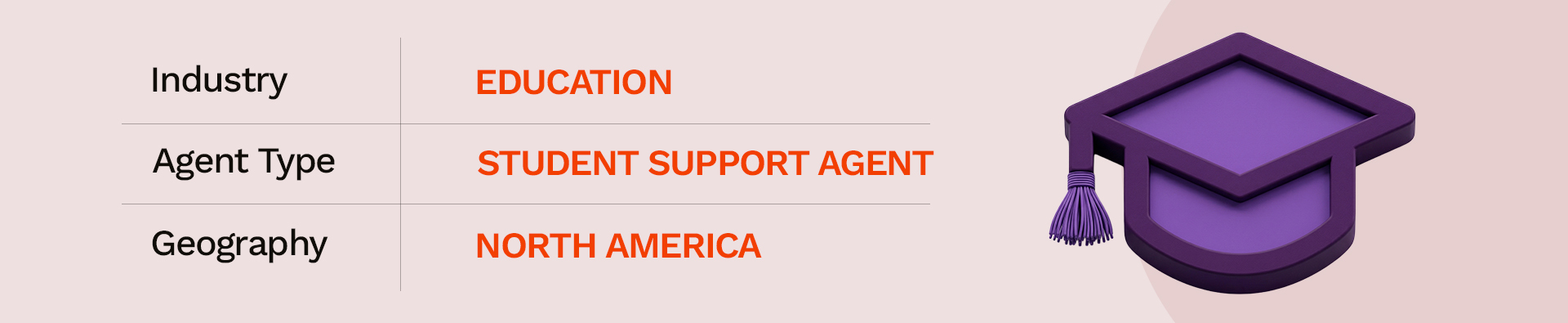
Higher-education institutions operate across long decision cycles, high inquiry volumes, and a wide range of student needs. In this use case, Agentforce 360 was deployed to support both prospective and enrolled students across admissions, academics, and administrative workflows.
The agent handled inbound questions 24/7, covering application status, program eligibility, financial aid, enrollment steps, and course planning. Because it was connected to live student records, responses were personalised rather than generic. Students received answers based on their actual status, deadlines, and academic history.
Beyond reactive support, the agent also took a proactive role. It nudged students when actions were required, such as missing documents, upcoming enrollment milestones, or academic risks identified through engagement patterns. Advisors received clear, contextual summaries instead of raw tickets, allowing them to step in where human judgment mattered most.
The impact went beyond faster responses:
Agentforce 360 here supported relationship-driven environments, where automation needs to feel human, contextual, and trustworthy.

In luxury retail, the challenge with digital commerce isn’t choice, it’s confidence. Customers hesitate when they can’t get the same guidance they would receive from a knowledgeable in-store advisor. This deployment focused on closing that gap.
Agentforce 360 was introduced to act as a digital commerce advisor, guiding customers through discovery rather than pushing static recommendations. Instead of relying on predefined product rules, the agent worked from live customer context, browsing behaviour, past purchases, stated preferences, and real-time interaction signals.
As customers explored products, the agent responded to intent-driven questions around fit, material, gifting suitability, availability, and comparable alternatives. Each interaction evolved dynamically based on how the customer engaged, allowing the experience to feel conversational rather than transactional.
When the buying journey became more complex, such as high-value purchases, customisation requests, or limited inventory scenarios, the agent handed off seamlessly to human advisors. Full conversational context travelled with the customer, so there was no repetition and no loss of intent. Advisors stepped in already informed and ready to add value.
The business impact was visible across key commerce metrics:
This use case shows how Agentforce 360 enables experience orchestration at scale, bringing together data, conversation, and workflow execution to recreate high-touch retail guidance in digital environments.

High-traffic platforms generate constant inbound interest, but speed determines whether that interest converts into revenue. In many cases, leads go cold simply because follow-up happens too late or without context.
In this deployment, Agentforce 360 was used to engage prospects the moment buying intent surfaced. The agent monitored behavioural signals such as page visits, content depth, and interaction patterns, and initiated conversations in real time.
Instead of using generic prompts, the agent adapted its questions based on inferred intent. It qualified prospects dynamically, gathering the right information at the right moment. Once qualification thresholds were met, leads were enriched with interaction context and routed directly into Salesforce for sales teams to act on.
The outcomes reflected a more disciplined pipeline:
This deployment shows Agentforce 360 functioning as a front-line revenue filter, ensuring sales teams engage only when intent is clear and value is real.
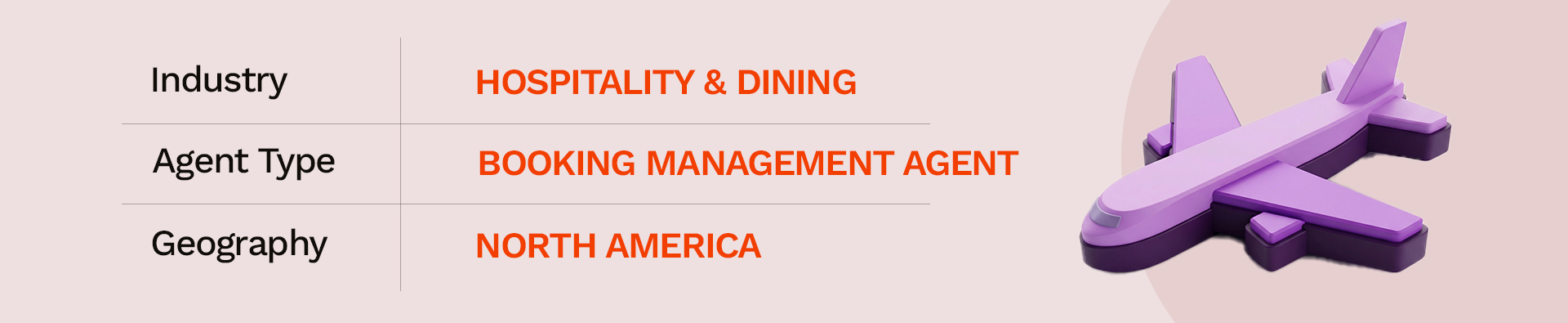
Reservation-driven businesses operate on thin margins and face intense pressure during peak hours. In this use case, Agentforce 360 automated end-to-end reservation management across booking, modifications, cancellations, and customer preferences.
The agent recognised returning guests, applied stored preferences, and handled multi-step interactions without human intervention. During peak demand, it dynamically balanced availability, waitlists, and demand signals to improve table utilisation.
When exceptions occurred, such as special events, group bookings, or service constraints, the agent escalated with full context, reducing friction for both staff and guests.
Business impact included:
This use case shows Agentforce 360 acting as an operational stabiliser, absorbing volume and complexity while preserving service quality.
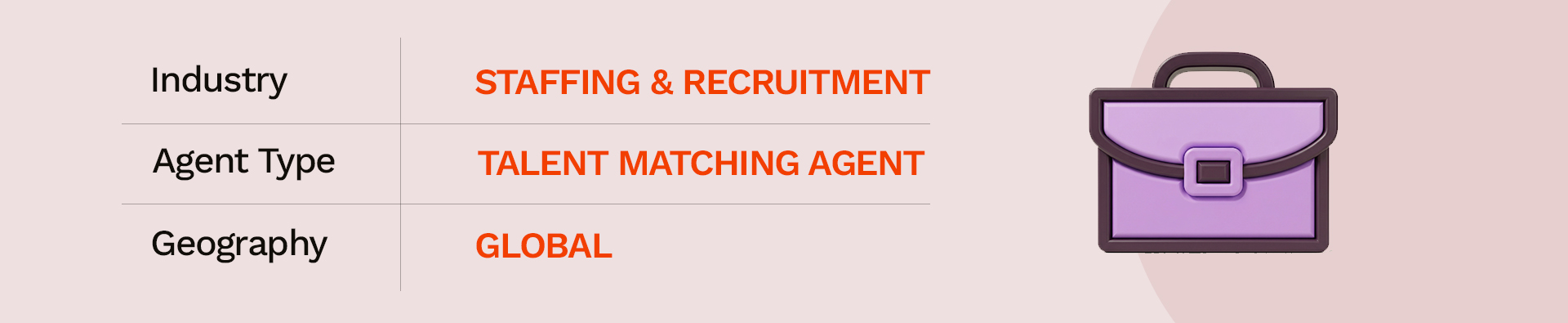
Staffing firms don’t struggle with access to candidates, they struggle with prioritisation. When thousands of profiles and roles move simultaneously, even experienced recruiters lose time aligning the right talent to the right opportunity at the right moment.
In this deployment, Agentforce 360 was used to introduce decision structure into workforce placement. The agent continuously evaluated candidate profiles against live role requirements, historical placement outcomes, geographic constraints, and availability signals.
Instead of replacing recruiter judgment, the agent surfaced ranked shortlists with transparent reasoning, why a candidate fit a role, where they had succeeded before, and how likely they were to convert. This allowed recruiters to move faster without sacrificing confidence in their recommendations.
As hiring cycles progressed, the agent coordinated interviews, follow-ups, and document collection. Recruiters worked from a single readiness view rather than juggling email threads, calendars, and ATS updates. This reduced friction across both candidate and client interactions.
The operational gains were measurable:
All recommendations remained auditable and policy-aligned. The agent handled pattern recognition and orchestration, while recruiters retained final authority, ensuring scale without loss of accountability.
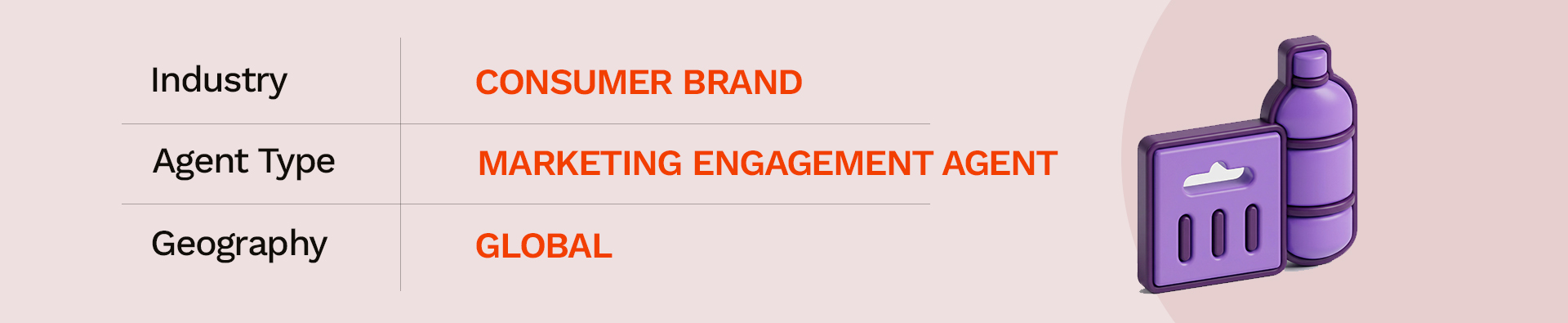
For many consumer brands, the challenge in marketing is timing. Traditional automation runs on schedules, not live intent, which causes missed opportunities when customers are ready to engage.
In this deployment, Agentforce 360 shifted marketing execution from campaign-based flows to real-time conversations. The agent engaged prospects across channels such as WhatsApp and web chat, responding based on how individuals interacted rather than where they sat in a predefined journey.
As conversations progressed, the agent adjusted questions and next steps dynamically. It captured intent as it appeared, qualified interest incrementally, and enriched lead records with contextual interaction data instead of static form inputs. When readiness was clear, leads were passed into Salesforce with a full interaction history.
The outcomes reflected this shift:
In this use case, Agentforce 360 acted as a real-time execution layer for intent, allowing marketing teams to respond when interest was alive, not after it cooled.
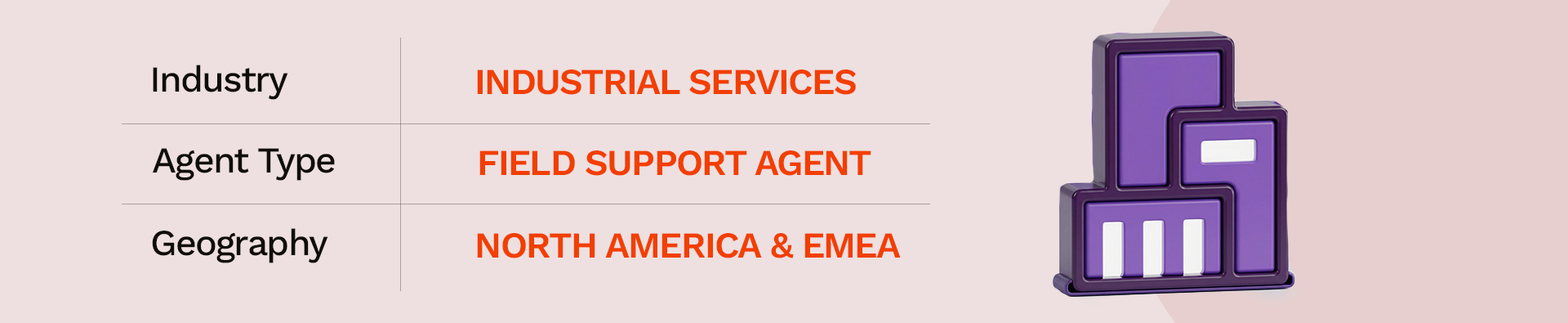
In field service operations, delays rarely come from technical difficulty. They come from uncertainty, technicians arriving without the right information, incomplete service history, or clarity on parts availability.
In this deployment, Agentforce 360 was embedded directly into mobile field workflows to reduce decision friction at the job site. The agent worked alongside technicians, surfacing guidance based on the specific asset, issue history, and service configuration in real time.
As work progressed, the agent provided step-by-step recommendations, relevant manuals, and live inventory visibility. Guidance adjusted as conditions changed, helping technicians make informed decisions without pausing work to search systems or escalate unnecessarily.
Rather than acting as a helpdesk replacement, Agentforce 360 served as an on-site decision aid, enabling technicians to work with confidence and complete jobs correctly the first time.

As B2B organisations scale, customer support complexity increases faster than ticket volume. A single case often spans support, engineering, finance, and account teams, each operating in separate systems with partial ownership.
In this deployment, Agentforce 360 was used to introduce structure into multi-team case handling. The agent assessed each incoming case for impact, urgency, and cross-team dependency. Routine issues were resolved autonomously, while complex cases were decomposed into defined subtasks with clear ownership.
Across the case lifecycle, the agent:
Support teams shifted from reactive escalation to controlled execution. Work progressed through a shared, prioritised view of ownership and next actions rather than stalled handoffs.
In this model, Agentforce 360 provided execution discipline for complex support operations, keeping cases moving with clear ownership and accountability.
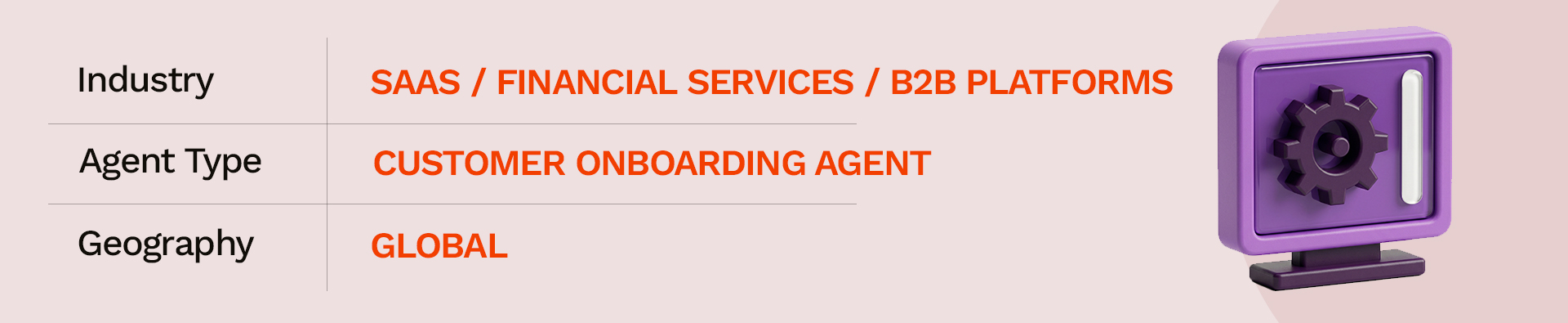
Winning the deal feels like the finish line, but in reality it’s the starting point. What happens during onboarding usually decides whether the customer actually succeeds with the product.
In many companies, onboarding still runs on scattered coordination. Sales hands things over to delivery. Delivery waits on configuration details. Customer success follows up on missing documents. The work moves, but slowly, and often without clear visibility.
In this deployment, Agentforce 360 stepped in to keep the process moving without constant manual chasing.
Once a contract was signed, the agent automatically initiated the onboarding flow. It triggered account provisioning, scheduled onboarding sessions, and ensured required setup tasks were assigned to the right teams. Instead of someone manually checking progress, the agent monitored each step and surfaced issues as soon as something stalled.
Across the onboarding journey, the agent helped by:
The difference became visible quickly. Customers moved through onboarding faster, teams spent less time coordinating tasks, and activation timelines became far more predictable.
Rather than replacing people, Agentforce 360 handled the coordination work behind the scenes, allowing teams to focus on helping customers succeed.
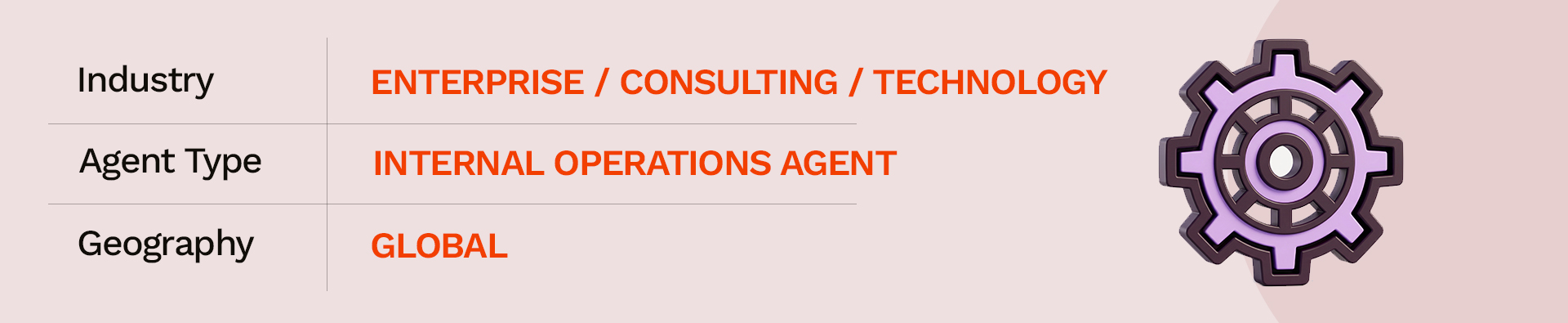
Inside large organizations, work often slows down for a simple reason: people spend too much time looking for information.
A sales rep preparing for a meeting might open five tabs just to understand the account. A support agent might search through past cases, emails, and documentation before responding to a customer. The information exists, but it is scattered.
This deployment used Agentforce 360 to make that information easier to access in the moment it was needed.
Instead of searching across systems, employees could simply ask the agent while working in Salesforce. The agent gathered context from CRM records, support history, documentation, and activity logs, then delivered a clear summary.
It also helped teams prepare for important interactions. Before a call or meeting, the agent could generate a quick overview of the account: recent opportunities, open support issues, product usage signals, and potential risks.
Over time, teams noticed a few clear changes:
In practice, Agentforce 360 became something simple but powerful: a way for employees to get the context they needed without breaking their flow of work.
Agentforce 360 is powerful, but value dn’t come from deploying agents alone. It comes from designing them around real work: clear ownership, reliable data, and workflows that reflect how teams operate day to day.
This is where our Agentforce specialists bring practical advantage. Our experts work with businesses to identify where agent autonomy creates real leverage, embed agents into existing Salesforce operating models, and ensure governance and adoption are built in from the start. The goal is not experimentation. It’s execution that holds up at scale.
For organisations serious about moving Agentforce 360 beyond pilots and into production, the focus must be on outcomes, not features.
If Agentforce 360 is on your roadmap, our experts can help you implement it right, before complexity slows you down.

With 17+ years in data, AI, and tech consulting, I’ve worked with pioneers from IBM to IIT Kanpur. Joining MIDCAI marks a fresh chapter - where deep thinking meets meaningful execution, and curiosity leads the way in blending AI, cybersecurity, and human-centered consulting.
Get in touch with us for any enquiries and questions
Define your goals and identify areas where technology can add value to your business
We are looking for passionate people to join us on our mission.
where your skills fuel innovation and your growth powers ours